


|
Robots are viewed as the best option to help solve labor problems, with over 90% of Fast-Moving Consumer Goods (FMCG) industry respondents indicating that robots and collaborative robots (with emphasis on robots) help address labor shortages in their factories. The application of robots improves consistency and accuracy of factory production, maintaining production line operations when the number of available employees is low. Other areas suitable for robotic technology include quality control such as weight and label inspection. Most FMCG industry respondents believe that collaborative robots provide minimal improvement or no improvement to labor shortages. On the other hand, collaborative robots often lack the speed required by the FMCG industry. Over 50% of surveyed FMCG industry respondents believe collaborative robots can only provide minimal benefits in addressing labor shortages.
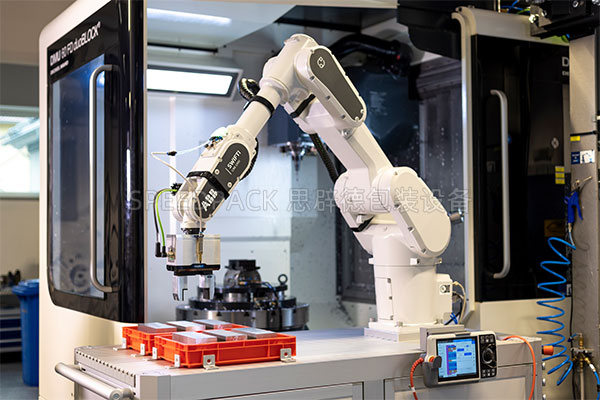
Collaborative robots have an advantage in ease of installation. Robots are more difficult to install in factories than collaborative robots. Some FMCG industry representatives state that the operating speed of collaborative robots is actually slower than manual handling. However, flexibility is a requirement for many FMCG industries, which is another area where collaborative robots have a clear advantage. In addition to ease of installation, collaborative robots also occupy less space. Space is a factor that many FMCG industry enterprises need to consider, as they typically operate in smaller spaces. It is clear from the FMCG industry that future development of robotic technology will require smaller robots that can handle higher payloads and operate in limited spaces. Robots operate much faster than collaborative robots and have higher payloads.
Due to the speed and weight limitations of collaborative robots, the FMCG industry still tends to favor robots. However, technological advances mean that collaborative robots can increasingly handle higher payloads, although the costs of these larger collaborative robots have not decreased. Mobility will also be a key factor in the coming years. As production lines increasingly demand flexibility, mobile collaborative robots will be seen more frequently as the preferred solution for FMCG. Currently, approximately 27% of the FMCG industry has deployed collaborative robots in their factories. With the combination of size, ease of installation, and mobility, this number is expected to rise to 57% within the next five years.
Mobility of collaborative robots is achieved by mounting them on Automated Guided Vehicles/Autonomous Mobile Robots (AGV/AMR). While the combination of collaborative robots and AMRs emerged a few years ago, this particular solution has not yet been widely adopted in industry. The main barrier here is that achieving collaboration between functional components (AMR base, collaborative robot arm, industrial cameras, etc.) is technically challenging and costly. Collaborative robots are easier to install in factories than robots. Interact Analysis predicts that by 2026, mobile collaborative robots will account for over 10% of the industrial robot market. Small and medium-sized enterprises are becoming increasingly interested in collaborative robots because the capital expenditure required is lower compared to industrial robots. Their high mobility and flexibility, along with ease of use, are particularly attractive to SMEs who typically do not possess the skills to operate more complex robotic applications.
Foreign researchers indicate that they rarely see SMEs investing in entire integrated robotic production lines, but they do observe gradual automation of production lines as SMEs experiment with new flexible and modular collaborative robot technologies. Similarly, large companies are attracted to collaborative robots by their competitive pricing and ease of use. However, the main attraction of these small robotic solutions for large FMCG companies lies in the flexibility that collaborative robots (especially mobile collaborative robots) can provide.


