|
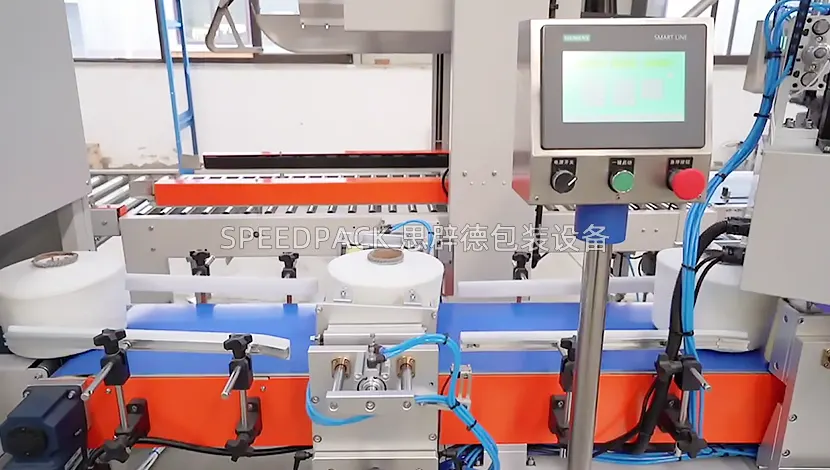
Secondary packaging protects your products during shipping. While primary packaging comes in direct contact with your products, secondary packaging bundles multiple product units into one secure, transportable load. From wrap-around case packers to automatic palletizers, secondary packaging equipment brings your products to the end of the packaging line. This process ensures they are ready to safely and reliably travel through the remainder of the supply chain.
The right equipment makes your secondary packaging line fast, consistent, and reliable. High-quality secondary packaging processes ensure your products arrive at their destination with minimal damage. Secondary packaging equipment mainly falls into the following types. Below we bring you more information about these different types of secondary packaging machines.

Benefits of Automatic Packaging Over Manual Packaging
Manual packaging, stacking, and packaging is a tedious process prone to various packaging errors. Facilities using manual secondary packaging processes have slower product packaging speeds, poorer accuracy and consistency compared to those using secondary packaging machines. Over time, secondary packaging equipment also provides better cost-effectiveness through longer uninterrupted operation, optimized material usage, and saving manual labor for more specialized tasks.
In addition to higher efficiency and cost-effectiveness, automatic and semi-automatic secondary packaging equipment creates a safer, healthier facility for your employees. Manual packaging processes require significant manual labor and repetitive motions, causing muscle strains. Packaging equipment reduces much of the physical labor burden on employees, allowing them to perform other tasks, reducing accidents or injuries.

Commonly used automated secondary packaging equipment for carton opening and forming, effectively solving problems such as non-standard manual box opening and slow box opening speed. Often used together with automatic case sealers.
Case packers are stable and reliable case packing mechanical equipment. Since products come in various sizes, shapes, and materials, secondary packaging facilities need case packing solutions that can handle various products. Industrial case packers can package various forms of PET, glass, etc., with simple, programmable format changes enabling factories to do so with less time and fewer troubles than manual processes.
Automatic case sealers are used for secondary packaging sealing operations, achieving automatic case sealing and strapping for incoming boxes on the packaging line, able to complete sealing work in multiple forms such as tape sealing, hot melt adhesive sealing, and nail sealing.
At the end of the packaging line, facilities must stack and secure products onto pallets. Stable pallet loads are key to transporting goods through the remainder of the supply chain. Safe, well-made pallets stay intact, protecting products even when handled by forklifts, trucks, and other transportation methods en route to final destinations. On the other hand, poorly made pallets may break apart, tip over, or otherwise cause product damage and profit loss. Palletizers optimize your end-of-line packaging by quickly and consistently creating safe, stable product loads.
Stretch wrapping machines use machine-applied stretch film to wrap and secure product loads. There are several different types of stretch wrapping available to meet the unique needs of different product types, sizes, and loads. You can choose from horizontal or vertical configurations, turntable stretch wrappers, portable robotic stretch wrappers, etc. Whether you need portability, high throughput, or space-saving solutions, stretch wrapping machines will meet your needs. Stretch wrapping machines can save stretch film costs and make full use of your packaging materials. Stretch wrapping machines are also more consistent than manual packaging processes.
Stretch wrapping machines are available in semi-automatic and automatic options. Semi-automatic stretch wrappers require some manual intervention to connect the film to the load, press the start button, cut the film at the end of the packaging process, or perform other minor tasks. Therefore, semi-automatic machines require more employees than automatic machines.
On the other hand, automatic stretch wrapping machines are ideal for high-volume facilities needing high-throughput solutions. Automatic stretch wrapping machines run at higher speeds and move products with little employee intervention. Fully automatic stretch wrapping machines operate independently, moving loads throughout the packaging process.
Laser guided vehicle systems or LGVs reduce labor costs and provide flexibility for the entire secondary packaging facility. LGVs function as automatic forklifts and move throughout the facility via laser guidance systems, providing exceptional precision and automation. LVGs transport materials and loads without employee supervision, improving efficiency and enabling your workers to focus on other areas of the packaging line. With our expert team, LGV technology is easy to set up and modify, allowing you to optimize vehicle routes throughout your facility when convenient.
Choose a Secondary Packaging Manufacturer You Can Trust
Factories rely on different types of secondary packaging machines to make their packaging lines faster, more reliable, and more efficient. Minimal downtime, comprehensive maintenance programs, and reliable customer support are crucial for maintaining effective secondary packaging equipment. Speed provides you with secondary packaging services. Contact us today to learn more about our industrial packaging machines and other secondary packaging equipment. We will help you find the right solution to optimize your facility and workflow.